The service of court proceedings on defendants continues to be a breeding ground for disputes. It is crucial that the proceedings (i.e. the claim form and the particulars of claim) are brought to the attention of the defendants in a particular way and within a particular timeframe.
The Civil Procedure Rules deal with the permitted modes of service. Sending by first class post to the defendant’s address is usually sufficient, but there’s plenty of room for error, so be careful! Advice should always be sought to avoid falling into any of the potential traps.
Service by email and flexibility if you don’t have lawyers?
In the recent libel action of Piepenbrock v Associated Newspapers Ltd and others [2020] EWHC 1708 (QB), a claimant, who didn’t have lawyers acting for him, served the claim form on the defendants’ solicitors by email. He did so at the last minute without having obtained confirmation that the law firm was instructed to accept service, let alone that they would do so by email. The claimant referred to his autism as one reason for the delay in serving the claim form and for his belief that, since the defendant’s solicitors had been corresponding with him, they were willing to accept service of the proceedings. The Judge commented as follows:
“The Claimant told me, at the hearing, that he and his wife had obtained and read the provisions of the CPR relating to service of the Claim Form. Although I do have sympathy for those who have to navigate the Civil Procedure Rules without any legal training, I consider that the relevant part of Practice Direction 6A, which governs service by email, and to which express reference is made in CPR 6.3, is perfectly clear. It may be that, in the haste to serve the Claim Form at the end of its period of validity, the Claimant and his wife missed (or failed to appreciate the effect of) this important provision”.
Accordingly, the Judge rejected the claimant’s explanation for his failure to adhere to the service rules finding that, in any event, the claimant’s wife had an adequate understanding of the position. The High Court held that valid service had not been effected and the claim was time-barred meaning that he was too late to pursue the claim.
Similarly in Gallagher v Hallows Associates [2020] EW Misc 7 (CC), the unrepresented claimant tried to serve proceedings on the defendant’s solicitors, but the court held that service was invalid and it was not willing to extend the time permitted for service.
These cases are reminders that just because you are acting for yourself rather than have lawyers acting for you does not mean the courts will show any leniency if you have not complied with the service rules.
Service to an address where you think the defendant is
In Ivanchev v Velli [2020] EWHC 1917 (QB) (16 July 2020), the High Court held (perhaps unsurprisingly) that placing a claim form in the mailbox for an apartment where the defendant had never lived did not constitute good service. The claimant had issued proceedings against someone who lived in the same apartment block but the claim form was sent to the wrong apartment. The Judge concluded that the claim form had never been served and therefore the claimant’s application for default judgment (i.e. judgment based on the Defendant’s failure to respond to the claim form in time) was dismissed. Instead, it was necessary for the proceedings to be re-served by the claimant.
The decision in Ivanchev can be differentiated from the decision in the recent case of EC Construction Ltd v Melt Hythe Ltd [2020] EWHC 970 (TCC) in which the Technology and Construction Court held that the claim form had been validly served by being left at a relevant address, where it had been left at the reception desk of the dental practice that shared a registered address with the defendant property development company. The address used for service was not only the defendant’s registered address but it was also the address used in the parties’ contract. The Judge commented that, in the circumstances, good service could have been affected by putting the claim form just inside the door, leaving it unattended on the reception counter or dropping it on the floor.
Conclusion
The decisions in Piepenbrock, Ivanchev and Gallagher are an important reminder that the courts consider service of proceedings as a serious and important step in litigation.
Parties should not take effective service for granted and claimants should endeavour to get service right the first time round to avoid their claim failing on a technicality. If in doubt, and in order to minimise the risks associated with defective service, parties should seek early advice from a solicitor specialising in litigation.
Holiday Inn owner Intercontinental Hotels Group (IHG) and Mike Ashley’s Frasers Group are expected to be the latest firms to warn of job losses this week as Britain reels from the fallout of coronavirus.
The companies will report financial results after months of being battered by lockdown restrictions. Both have warned of potential redundancies.
The UK has haemorrhaged more than 134,000 jobs since March, including thousands axed in the past week.
Warning: On Thursday, Mike Ashley’s Frasers Group will report results for the year to April
LGH Hotels Management was among the businesses warning of layoffs, with the company revealing 1,500 roles were at risk on Wednesday.
Hotels have been among the worst-hit businesses during the crisis. Industry group UKHospitality has warned that up to 20 per cent of jobs at the larger chains are at risk. Hilton intends to axe 2,100 jobs globally, while Premier Inn owner Whitbread will cut 250 jobs from its head office.
More than 1,000 jobs at Edwardian Hotels group, which owns the May Fair in London, are also at risk, according to The Sunday Times.
IHG is understood to have told staff at five Scottish hotels that at least 137 jobs are at risk. It also manages hotels in England and Wales. IHG, which has seen shares plunge 25 per cent in 2020, is due to report its half-year results tomorrow. A spokesman said: ‘We have done everything to retain jobs. We are consulting our colleagues on plans to resize. This is likely to involve some redundancies.’
On Thursday, Mike Ashley’s Frasers Group will also report results for the year to April.
It owns sportswear retailer Sports Direct and department store chain House of Fraser.
Frasers Group warned last month that more of its high street stores were at risk.
The results out on Thursday will only cover the initial impact of the pandemic.
Sophie Lund-Yates, an equity analyst at Hargreaves Lansdown, said: ‘Frasers Group has been very quiet. The results will be the first time we get an idea of what store closures have meant for the group’s financial statements.’
The pandemic is also hammering restaurants, the Centre for Cities warns today. Some 22,000 jobs in the sector have been shed this year and experts fear more losses. The centre’s Professor Joshua Bamfield said many restaurants were on ‘their knees’.
Share or comment on this article:
Some links in this article may be affiliate links. If you click on them we may earn a small commission. That helps us fund This Is Money, and keep it free to use. We do not write articles to promote products. We do not allow any commercial relationship to affect our editorial independence.
One in three UK employers expect to make staff redundant between July and September, a survey suggests.
The research by the Chartered Institute of Personnel and Development (CIPD) and recruiter Adecco shows a 50% jump in the number of employers expecting to cut jobs compared to three months ago.
In the private sector, 38% of firms plan to make redundancies, compared to 16% in the public sector.
Firms with plans to hire rose – but numbers were down on past years.
‘Sombre autumn’
There have been an increasing number of job cuts as the coronavirus pandemic wiped more than a quarter off UK economic output.
In the month leading up to 9 July, more than 2,000 employers were asked whether they planned to make redundancies.
While 33% said they did expect to let staff go, another 49% said they planned to hire in the three months until the end of September.
That indicated an increase in confidence compared to the previous quarter when just 40% said they planned to take on new staff.
However, that figure was still “well below” levels seen in previous years, the report’s authors said. And the proportion of employers planning to hire, relative to those expecting to let go of staff, had fallen to its lowest level since 2013 when the survey began in its current form, they said.
‘It’s been really upsetting and stressful’
Image copyright William Bird
Image caption
Events producer William Bird has been made redundant after four years with his firm
William Bird, 27, had been working as an assistant producer at an events agency in London that creates tailored experiences for big brands.
He was furloughed in April, and then at the end of June, he was told that he was being made redundant, after four years with the firm.
“Unfortunately, right now members of the public do not feel safe to attend events… so at the end of June, I was told that my company had done everything to try to retain me, but due to the lack of work coming in, they didn’t have the financial backing to keep me on,” he told the BBC.
Mr Bird said it had been a “difficult year in general”, as his mother passed away from cancer a few weeks into lockdown.
“It’s been really upsetting and stressful. I’ve gone from having a tragedy in the family, to looking for work, and at the end of August I’m going to have to move out from the flat I rent in London with my girlfriend because we can’t afford it anymore,” he said.
He says he only received three weeks’ of redundancy pay as he was on rolling contracts during his first year with the firm. And he is upset that his month of notice in July was paid at the 80% furlough rate, rather than the full salary listed in his contract.
The only consolation to the situation, says Mr Bird, is that his firm didn’t want to let him go: “They told me that this wasn’t performance-based at all, and that they were making difficult decisions for the future of the company, with the hope that after the industry recovered, they’d love to offer me my job back.”
Gerwyn Davies, an advisor at the CIPD, predicted a “sombre autumn for jobs”.
“This is the weakest set of data we’ve seen for several years,” he said.
“Until now, redundancies have been low – no doubt due to the Job Retention Scheme – but we expect to see more redundancies come through this autumn, especially in the private sector once the scheme closes.
“Hiring confidence is rising tentatively, but this probably won’t be enough to offset the rise in redundancies and the number of new graduates and school leavers entering the labour market over the next few months.”
It comes as data from the Centre for Retail Research suggests that more than 22,000 restaurant jobs have been slashed already this year. That is more than double the number announced throughout the entire of 2019.
Last week Pizza Express said it was considering closing 67 of its UK restaurants, which would mean the loss of 1,100 jobs.
Meanwhile, Byron has announced 651 job cuts; the Casual Dining Group, which owns Bella Italia and Cafe Rouge, is to put 1,909 out of work and the owner of Upper Crust, SSP, has said 5,000 jobs are at risk.
It comes as figures obtained by the BBC showed the number of firms that notified the government in June about plans to cut 20 or more jobs was five times higher than in the same month last year,
A Freedom of Information request shows that in June 1,778 firms said were intending to cut more than 139,000 jobs in England, Wales and Scotland. In June 2019, only 345 firms had plans to cut 24,000 jobs.
Have you been made redundant in the last few months due to the pandemic? Share your experiences by emailinghaveyoursay@bbc.co.uk.
Please include a contact number if you are willing to speak to a BBC journalist.
Despite a tentative easing of the national lockdown, the lingering economic and social consequences of this policy are frighteningly obvious to anyone venturing into central London.
While social life and economic activity has, to a large extent, returned to the outer zones and suburbs, the offices and shops of London’s professional districts remain eerily and worryingly quiet.
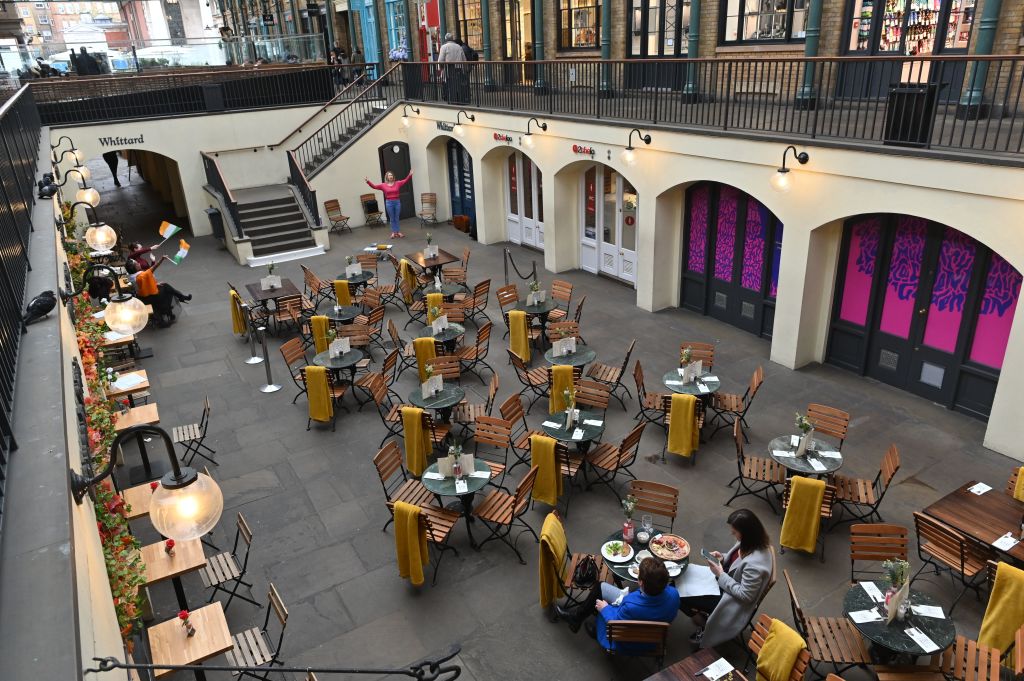
Newly pedestrianised streets may be tempting some customers back to the pubs, cafes and restaurants of Zone One. But welcome as this is, it amounts to a mere trickle in place of what was previously a mighty tide of people coming in and out the City, the West End, Canary Wharf, King’s Cross and the capital’s other commercial and business districts.
The situation in the UK is stark when compared with other European countries. According to new research by JP Morgan, just 30 per cent of UK workers are doing five days a week at their place of work.
In Italy it’s 40 per cent; in Spain it’s 41 per cent; 49 per cent of Germans are doing a full working week in the office; and 50 per cent of French workers have returned full time. The UK also has the lowest number of people choosing to do between one and four days in the office.
The government has formally dropped its ‘work from home’ advice but more than a week after that guidance changed the housing secretary, Robert Jenrick, was asked about the ghost towns and empty business districts. He acknowledged the scale of the problem and said “we need to get back into them.”
If the government really wanted to hammer this message home, it could do so. Instead, it appears to be gripped by fears of a second wave and is more than happy to let businesses ride out the rest of the year with staff working remotely. On top of a looming unemployment crisis, this approach will have dire consequences for jobs and livelihoods in city centres like London and areas of high density offices.
The absence of the human tide risks leaving a parched landscape devoid of the countless personal and professional interactions that give life to a city and purpose to its people.
Getting businesses and venues thriving once again should be an urgent priority
London Mayor Sadiq Khan
London faces an economic emergency outside the office
CEBR estimates that 30 per cent of London staff working from home in 2021 will result in nearly £180m of lost spending on lunch and other activities (AFP via Getty Images)
While more flexible working and, of course, a necessary appreciation of public health concerns, will change the way we think about work in the months and years ahead, an economic emergency is unfolding on streets that used to serve millions of commuters and residents.
The Centre for Economic and Business Research calculates that around £2.3bn of spending in shops, pubs and restaurants around the capital’s main business districts was lost or displaced between March and June.
The think-tank also predicts that throughout next year 30 per cent of London-based employees will still be working from home on any given day, resulting in nearly £180m of lost spending on lunch, socialising and other office-related services each month.
There’s little point denying that once the pandemic has passed people will almost certainly work from home more than they used to.
And no business should fear a new approach that allows staff more freedom and flexibility, especially not if recent months have proven just how much work can be achieved away from the office. But this is different to the sudden and forced starvation that our business districts are enduring.
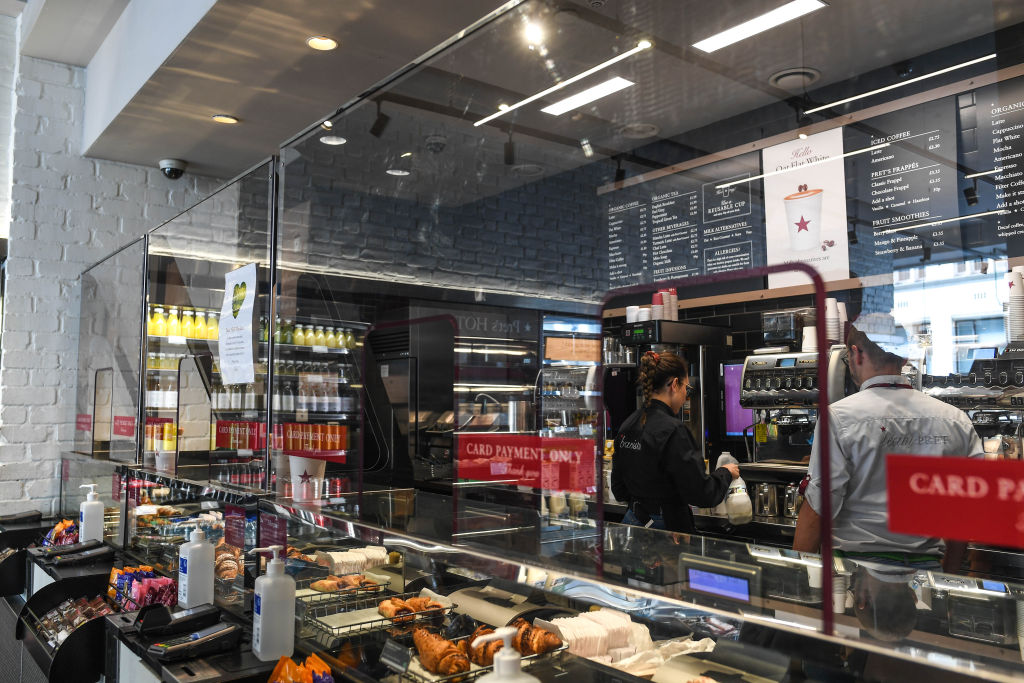
Pret A Manger is set to cut at least 1,000 jobs and close 30 stores as it suffers a lack of footfall from London office workers (Getty Images)
New research by the Legatum Institute shows that while just 16 per cent of people working in financial services have been negatively impacted by the pandemic and lockdown, the figure for hospitality workers is over 80 per cent. The former must be able to do their bit to help the latter.
Employers will rightly feel that their first responsibility is to their staff. But there must be a recognition that sustaining and supporting the myriad small businesses, retailers, restaurants, pubs and service providers that draw a living from the presence of people is a matter of real importance.
City A.M. believes it is now absolutely essential that businesses do all they can to start bringing staff back into their places of work, safely.
The view is shared by London mayor Sadiq Khan, who says “getting businesses and venues thriving in central London once again should now be an urgent priority”.
The mayor adds that “if more people aren’t confident the virus is under control, our wonderful ecosystem of shops, bars, cafes and cultural venues is at risk of a damaging slump that could take years to recover from.”
Our position is also supported by the Lord mayor of the City of London, the Right Honourable William Russell, who says “we support the aim of encouraging Londoners to return to work safely in the City”, adding “we want to get the Square Mile back on its feet as quickly as possible in a safe and sustainable manner, in line with government guidance.”
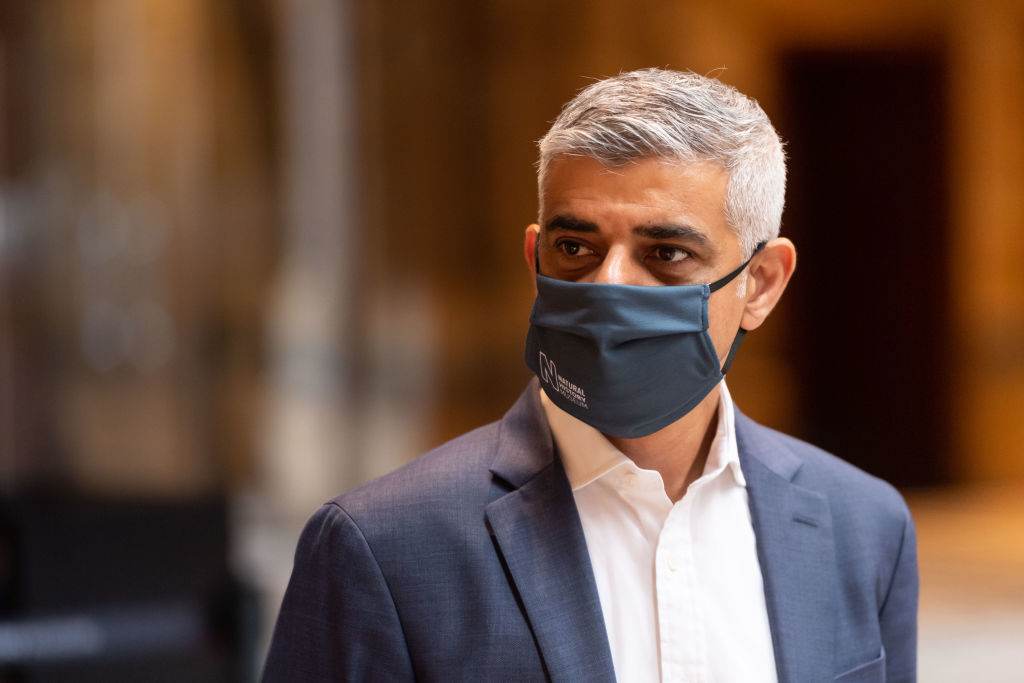
London mayor Sadiq Khan tells City A.M. that without a return to offices, London’s vibrant shops and cafes face “a damaging slump that could take years to recover from” (Getty Images)
London’s leading business groups also join our call for employers to do all they can to bring about a safe return to offices. Richard Burge of the London Chamber of Commerce and Industry says: “The time has come to focus on and talk about what we can do rather than what we cannot.”
He adds that employers must put in place new office routines and work patterns that give staff “even greater access to the extraordinarily diverse retail, hospitality, and cultural offerings of London.”
Some London employers eye a September return to offices
Such a shift cannot be implemented overnight, but the right processes and risk-management strategies should allow larger employers in particular to begin the task of bringing people back together.
Many employers are already preparing for innovative shift patterns, flexible work, new office layouts and safe working practices. At the very least, companies should be actively preparing for such a transition, to be deployed when they feel the time is right. We applaud those firms doing just that.
Sadiq Khan is also hopeful that more and more people will come back to central London offices after an August break, saying: “I hope to see more employees returning to the capital from September. A huge amount of work is being done by businesses to make their offices safe, whether around office layouts, one-way systems, or enhanced cleaning and hygiene.”
Canary Wharf ‘open for business’
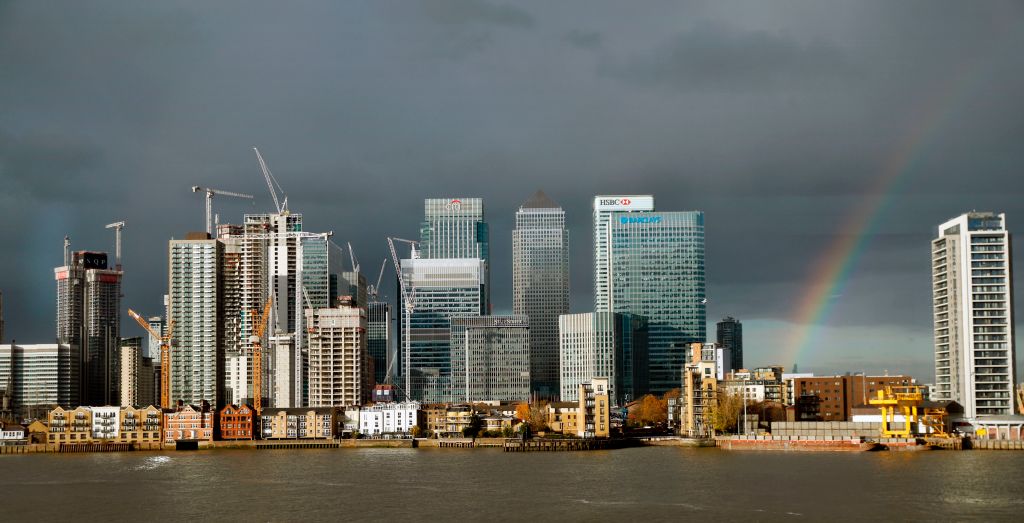
Canary Wharf normally hosts 120,000 workers, but this number has dwindled to a few thousand amid coronavirus (AFP via Getty Images)
More than 120,000 people work in Canary Wharf. At least, they used to.
The chief executive of the Canary Wharf Group, Shobi Khan, is confident that now is the time to bring people back.
“We’ve planned carefully to ensure that Canary Wharf is a safe, clean and socially distanced environment, in line with government guidelines, to accommodate large numbers of people as they return to the office,” he tells me.
“Everything is in place, and we are very much open for business – for office life to resume, and for companies to bring their people together to interact and rebuild that essential social capital; for the network of businesses that support them to flourish once more; and for the safe return to the spaces in which we work, eat, shop, exercise and socialise, and on which the life of our city is built.”
For Shobi Khan, there is more to this than a question of productivity or retail footfall.
We’ll ensure Canary Wharf is safe, clean and socially distanced
CEO of Canary Wharf Group, Shobi Khan
“A company is as strong as its people, and for companies to thrive and grow they need their people to interact, collaborate, be creative, spark ideas and learn from each other through personal interaction,” he explains.
“Companies can survive when their employees are working at home, but that is largely because they are living off the social capital they have accrued over years. Five months into the pandemic, that capital is being rapidly depleted. How will they nurture their employees and grow their businesses? It’s very hard to do that via conference calls alone.”
L&G: Offices can boost Londoners’ mental health
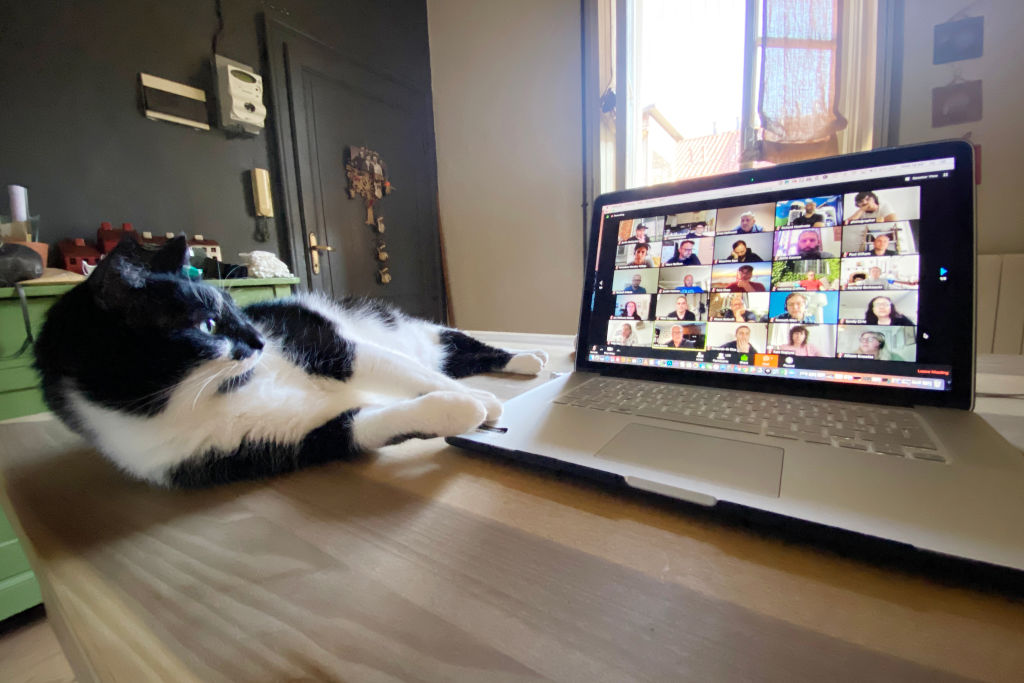
Long meetings have been replaced by cluttered Zoom calls during workers’ hiatus from their London offices (Getty Images)
Another major employer who refuses to accept that the days of the office are numbered is Legal and General, whose chief executive Nigel Wilson says that while home-working will remain the norm for most people in his company until the end of this year, “the death of the office has been greatly exaggerated”.
He says that over the past few weeks they’ve been trying hard to make their London offices available to staff who want to come in, even occasionally, because he believes in “recognising the benefits to collaboration and mental wellbeing.”
He also echoes Barclays and PwC when he says he “recognise[s] that where our people are working impacts those local economies; we want to support these communities as well as taking care of the wellbeing of our people.”
The death of the office is greatly exaggerated
Legal & General CEO Nigel Wilson
Paul Dreschler of London First said that he expects to see a “a step up in the return to London’s workplaces” in September. Such a move would “be a shot in the arm for the many businesses which rely on commuters and workers’ spending and will provide a boost for the UK economy which relies on the capital to provide around a quarter of the nation’s growth”, he adds.
Dreschler also highlights a concern, often cited, about an apparent reluctance to use public transport, and he calls on operators “to boost confidence in the transport system”.
Tube and buses now cleaner than ever
London buses are up and running to bring people to the city’s reopened shops as the government continues to ease its lockdown (AFP via Getty Images)
Public health authorities in Paris, Tokyo and Austria have failed to detect any link between their public transport networks, including subways, and any of the recently identified spikes in infection rates.
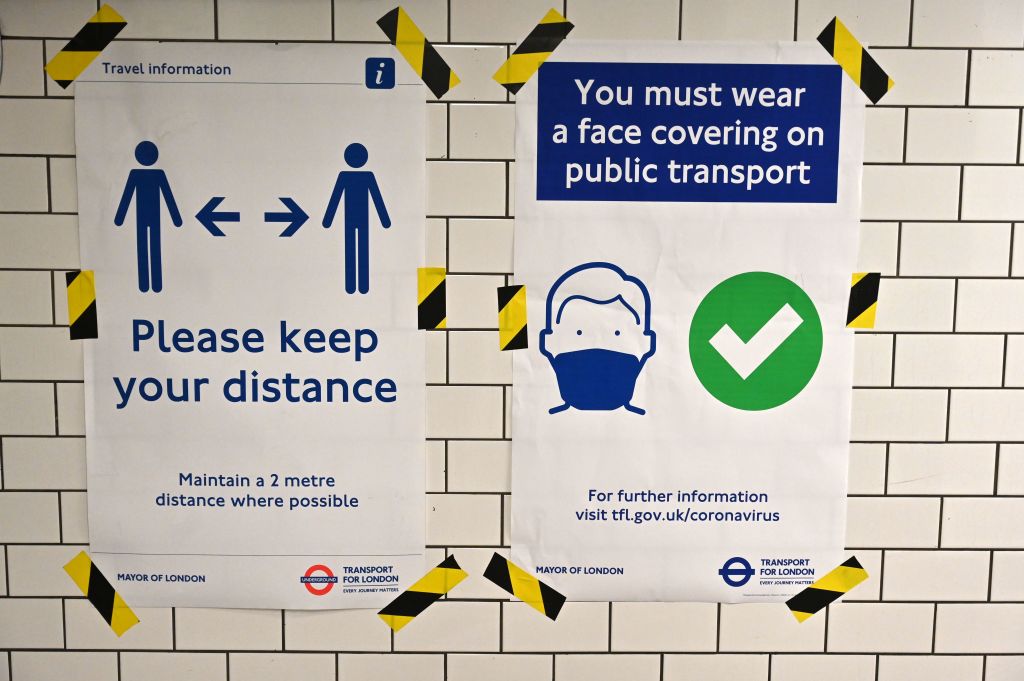
A report in the New York Times suggested mitigation efforts on public transport have been key to reducing transmission, with public health experts identifying mandatory masks, regular use of disinfectant and staggered commuter times as being particularly effective.
Transport for London (TfL) is utilising all three of these tools, and its commissioner, Andy Byford, insists that customers returning to the Tube and buses “are seeing a cleaner, more orderly network than ever”.
He says the deployment of hospital-grade disinfectant and more than 1,000 hand sanitiser stations has “resulted in independent research returning negative tests for coronavirus on high-frequency touch points”.
Faced with the prospect of more commuters returning to their London offices from September, Byford says his message to everyone is that they’re doing everything to keep things clean and safe. “We are here to help and to keep London moving,” he says.
TfL has deployed more than 1,000 hand sanitiser stations around London’s Tube network as they prepare for people to return to work and socialise in the city (AFP via Getty Images)
Out of office: The economic cost for London grows by the day
While it’s clear that there are obstacles to overcome, not least a clear commitment from the government on a full return to school in September, the economic and social cost of cutting ourselves off from our places of work is growing by the day.
The longer we stay away from offices, the deeper the damage to London. Everyone should be mindful of the risk posed by a resurgence of infections, but we must also hope for the best and be ready to facilitate the vital economic and personal connectivity of which we have been so starved since the end of March.
There’s much more to the commercial life of a city than offices
CEO of Canary Wharf Group, Shobi Khan
Canary Wharf’s Shobi Khan is adamant that “there’s much more to the commercial life of a major world city like London than simply what goes on inside an office”. He says: “It’s everything that surrounds the office too – the coffee and sandwich shops; the health clubs and dry cleaners; the fashion and food stores, the bars and restaurants where you meet after work.”
“These are the places that people rely on and bring them together, which provide the social and cultural foundation of a city, and make London the vibrant capital that it needs to be again,” he adds.
All of us have had to adapt to the circumstances this pandemic has created, but we must now focus on how to restore and nurture what was here before it.
COVID-19 has turned our day-to-day lives upside down, as we have all had to adapt to a ‘new normal’, and the world of litigation has been no different.
From virtual court hearings, to electronic intimation, we have witnessed a move away from some of the traditional practices that have characterised our Scottish court system but how will these changes impact Scottish litigation in the future?
Service and Intimation
Are the days of serving a court document via post or by personal service (by Messengers-at-Arms or Sheriff Officers) gone? The Coronavirus (Scotland) Act 2020 has, amongst other things, permitted service and intimation of court documents to be carried out electronically (generally via e-mail) – provided the party on whom the document is served has agreed to service by this means in advance. This allows for a much quicker and more cost-effective approach.
Key to this new method is accepting the use of electronic service. Read our blog on the important issues which should be considered.
Hearings
In April, the first virtual hearing took place in the Inner House of the Court of Session. In June, the first virtual proof took place with video evidence. Both mark huge milestones in our judicial system, though seeking permission for individual witnesses to give their evidence by video link had been an option for some time, particularly in the Commercial Court.
Witnesses can now give evidence via video conferencing platforms such as Webex, Microsoft Teams and Zoom. A secure and stable video link is important, particularly where issues of reliability and creditability arise. It is safe to say that hearings have been, and can be, conducted successfully in a virtual setting. But what is it like? My colleague, Jamie Reekie, recently commented on his experience appearing ‘virtually’.
These changes are welcomed by many. It allows great efficiency, avoiding charges for ‘travel’ or ‘court waiting’ time. Logistical issues with overseas witnesses can be eliminated. More importantly perhaps, our backs will be saved from lugging court documents to and from court. Although the use of electronic files had been growing in recent years, paper folders had never been dispensed with entirely, whereas it is becoming the norm for electronic files to be used exclusively in remote hearings. It is hoped that these efficiencies will be to the benefit of clients, with the costs of conducting a litigation being reduced.
Alternative Dispute Resolution
In March, the Scottish courts effectively closed their doors for business as a result of the COVID-19 pandemic. Ongoing court actions were paused. This led many to explore other methods of resolving disputes out with the courts.
Mediation, traditionally conducted with parties convening (physically) in a room to thrash out the issues in dispute, has also gone virtual. Great use of remote mediation, held over video conferencing software, has been made during the restrictions imposed as a result of COVID-19.
If a resolution is reached between parties in a remote mediation, an agreement can be concluded and executed within seconds using electronic signatures via online signing platforms such as DocuSign or Adobe Sign.
Remote mediation has been an effective method for quickly resolving disputes during lockdown. Going forward it may continue to be appealing where time or cost factors are an issue. Plus, for many, being able to avoid the confrontation of a face to face meeting at the mediation is an attraction.
A change in the way we litigate?
Have we seen the start of an overhaul to the Scottish court system? As we continue to battle through COVID-19, with reports of a potential second wave, the changes we have observed so far are likely to continue to evolve and develop. As my colleague Stephen Goldie commented recently, ‘we cannot, and should not, go back to what we were doing before’.
So, will these changes be the ‘new normal’ for Scottish litigation? Only time will tell…
Image caption
More than £12.3bn was given to local authorities to pass on to eligible small businesses across England
Emergency coronavirus funding for firms will go back to the Treasury at the end of the month if it is not claimed, business leaders have said.
Four months after £12bn was released to help them through the coronavirus pandemic, £1.5bn is unclaimed.
The Federation of Small Businesses (FSB) warned the money was sitting in councils’ bank accounts.
The government said it was working with councils to reach eligible businesses.
Emergency grants for businesses in England were announced on 17 March.
Image copyright Getty Images
Image caption
A month after the schemes launched nearly 500,000 businesses had received a grant
Lump sums of £10,000, through the Small Business Grant Fund, and £25,000 through the Retail, Hospitality and Leisure Grant Fund, were intended to help businesses’ cash flows during the coronavirus pandemic.
‘Restrictive criteria’
As of 3 August, £10.8bn had been paid out to nearly 900,000 businesses, leaving £1.5bn yet to reach nearly 80,000 eligible firms by late August, according to official data.
The figures suggest more than one in five businesses in areas such as Wealden, South Lakeland and South Somerset have not claimed grants.
Of the 314 English councils distributing the money, 291 have at least one business entitled to support that has not received it.
The figures also suggest there are 24 authorities that paid out more than they were allocated. Westminster City Council paid £17m more than it was allocated.
Mike Cherry, chairman of the Federation of Small Businesses, urged firms to apply for the grant funding, but added it should not be returned to the government if it was not claimed by the deadline.
“There are many small businesses who aren’t eligible, so the government should widen the criteria to those on the periphery,” he said.
He added the money would be a “Godsend” for businesses left out by the “restrictive criteria” for the grant, such as firms in supply chains to other small ventures.
‘Sitting in the council’s bank’
Wirral Council held £14.7m of unspent funding as of the end of July.
Councillor Ian Lewis said: “From my discussions with business owners and shopkeepers in Wallasey, some do not realise that this is a grant, not a loan, so it doesn’t have to be repaid. Even businesses that were able to stay open are eligible.
“It would be tragic if businesses close or jobs are lost because they do not apply for this money – it’s literally sitting in the council’s bank waiting to be claimed.”
Who is eligible?
Image copyright Getty Images
Image caption
Places like shops, live music venues, gyms or hotels are eligible for grants, and many others
Businesses can apply for one of the following funds:
For the small businesses grant they must be based in England, occupy property for business use and have been eligible for relief on various rates by 11 March 2020.
To access the retail, hospitality and leisure grant the business must be mainly used as a venue for hospitality, retail or leisure. Some charities can also apply.
Brent Council in London said it was telling businesses in “any way we can” about the grants, as the borough did not want to hand back any of its £4.5m remaining funds to the government.
Councillor Shama Tatler said it was “a surprise” the government was looking to “end the schemes and demand the money back”, before all eligible businesses had been contacted.
“We now even have a team of officers physically knocking on people’s doors and urging them to claim before the deadline,” she said.
A spokesman for the Department for Business, Energy and Industrial Strategy said: “We are working with local councils to ensure funds get to as many eligible small business owners as possible.
“Businesses that are eligible but have not yet received grant funding should speak to their local council as soon as possible.”
Additional reporting by: Anna Khoo and the Local Democracy Reporting Service
UK Chancellor Rishi Sunak has said a popular program to support furloughed workers amid the Covid-19 outbreak cannot last indefinitely. The opposition warned that many people will lose their livelihoods unless it is extended.
Under the program, which launched in April, employers can apply for grants to cover more than half of the wages of employees they were forced to furlough because of the lockdown. The scheme was later renewed until October 31 and has helped to retain 9.6 million jobs, according to government data. However, the program will not be extended any further, Sunak told BBC Radio Scotland.
It’s wrong to keep people trapped in a situation and pretend that there is always a job that they can go back to.
The chancellor said earlier on ‘BBC Breakfast’ that not prolonging the job retention scheme was “one of the most difficult decisions” he had had to make.
I think most reasonable people will say ‘gosh, that’s not something that can carry on forever.’
“In common with almost all countries around the world … their versions of this are slowly being wound down toward the end of the year,” Sunak said.
The government has been under pressure to renew the program beyond October amid growing fears of a wave of job losses in the autumn. They are coupled with anxieties over a second wave of coronavirus infections, with the next planned phase of easing quarantine restrictions postponed last week due to the daily increase in Covid-19 cases.
Scotland’s Economy Secretary Fiona Hylsop argued that the scheme, which has proved to be vital for workers and businesses alike and “undoubtedly helped save lives,” should last longer in some parts of the country.
In a similar vein, Labour Party MP Ed Miliband warned that the government would be “culpable for thousands of workers across the country losing their jobs and livelihoods” if it ends the job retention program prematurely.
London-based think tank the National Institute of Economic and Social Research advised that the government extend the scheme until June 2021. The institute’s Deputy Director Garry Young said that shutting down the scheme prematurely would be “a mistake” that would increase “the probability of economic scarring.”
Sunak, meanwhile, rolled out a plan to give businesses a one-off bonus of £1,000 ($1,308) for each furloughed worker who is still employed as of January 31, 2021. The government also plans to launch a £2 billion ($2.6bn) scheme to support creating “hundreds of thousands” of jobs for young people.
Think your friends would be interested? Share this story!